



More people voted in this year’s Dutch municipal elections than four years ago, bucking a trend of falling turnout in recent decades.
The national figure of 53.7% was almost 3% higher than in 2022, when voting was spread over three days because of coronavirus restrictions.
Turnout varied widely around the country, from 80.6% in Staphorst, Overijssel, a Bible bBelt community where the SGP and ChristenUnie won 10 of the 19 seats, to 40.6% in Rotterdam.
Rotterdam’s figure was up from 38.2% four years ago, meaning city mayor Carola Schouten will abseil from the 185-metre Euromast tower to fulfil a promise she made before the election.
She will be joined by Rob Jetten after the prime minister made the same pledge in response to a journalist’s question about the nationwide turnout on the morning of election day.
Fear of heights
“I’m very happy to do it,” said Schouten, who has admitted to having a fear of heights. “It was important that we got the turnout higher than four years ago. We did it, but we still have a long way to go.”
Jetten confessed to having a similar fear of heights to the mayor, but said: “It’s a lovely view and it feels like a very bold thing to do. But in all honesty, I’m glad that more people have made their way to the polling booth today.”
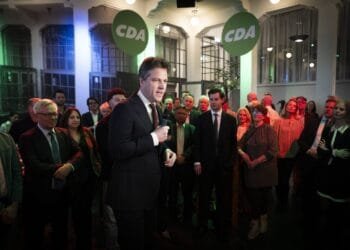
Jetten added that he was pleased overall with the results for his D66 party and its partners in the national coalition, the Christian Democrats (CDA) and right-wing liberal VVD.
He recognised that some local parties, including Richard de Mos’s Hart voor Den Haag in The Hague, had polled strongly after promising voters they would lobby the government to be given an opt-out from the requirement for all municipalities to house asylum seekers.
“We need to be honest about the fact that we will decide at the national level how we distribute refugees and look locally at the best way to do that,” said Jetten.
“Not a referendum”
CDA leader Henri Bontenbal, whose party won the most council seats nationwide, said: “I don’t think this was a referendum on the cabinet’s policies, but we’ve been in a coalition for a few weeks and people will agree with some of our decisions and disagree with others.”
Opposition party GroenLinks-PvdA took the largest share of the vote for a national party with 13.7% in the municipalities where it stood, though it lost 139 council seats altogether.
Party leader Jesse Klaver said: “I think if you had asked people a few months ago if GL-PvdA would be the biggest party in the municipal elections, they’d have laughed at you.”
Not all communities saw turnout rise: in Tubbergen, Overijssel, the proportion of people voting dropped from 64.5% to 61.8% after local party Lokaal Sterk, which held three seats from 2022, did not field candidates this time.
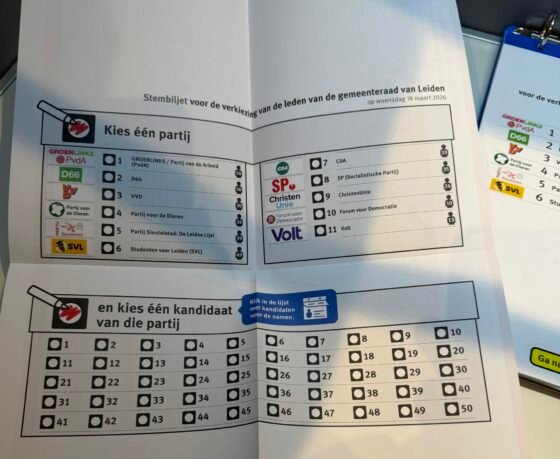
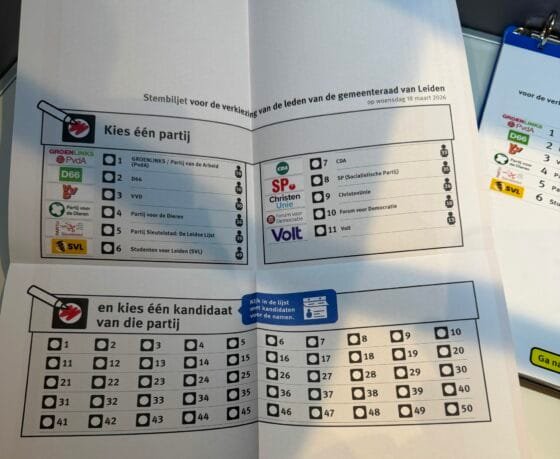
Eleven municipalities used a smaller voting paper where voters had to mark two circles – one for a party and one for a numbered candidate – but in 10 of them the number of invalid votes was higher than in 2022. In Den Bosch the percentage of spoiled ballots increased from 0.2% to 0.8%.
In Enschede, the PVV won three seats, but local party leader Alberto Blömer, who was in second place on the list, died suddenly two weeks before the poll. His name was still on the ballot because the deadline to name a replacement had passed.