




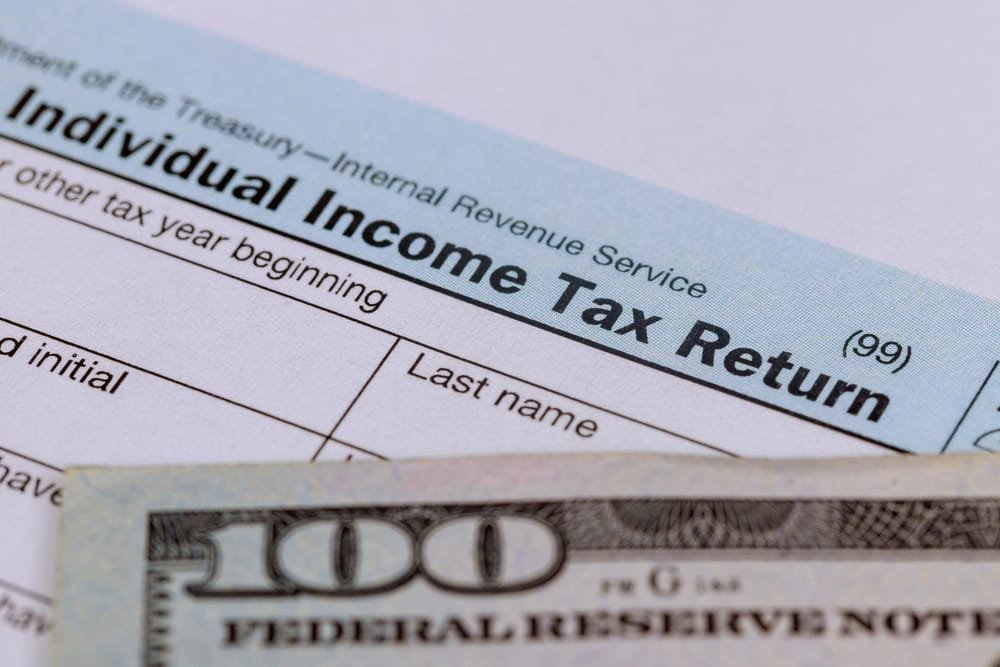
“You didn’t file a Form 1040 tax return.” These words should strike fear into the heart of any American who has been caught in the sights of the Internal Revenue Service.
Unlike the Dutch tax authority’s blue envelopes, letters from the IRS are all black and grey and if you haven’t fulfilled your obligations, they spell trouble.
IRS notice Letter 566, 525, 2205 and 3572 – they are all indications that the IRS want to perform a tax audit on you and according to Taxbrella, this is exactly what you want to avoid.
“It’s not a pleasant experience to be audited by a tax authority,” explains head tax advisor and IRS enrolled agent, Swaroop Chandramohan.
“Once they audit you, they pick your file and are going to go back as much as they want: if you have not been compliant, the chance of a penalty for previous non-filings increases.”
Legal obligation
If you happen to have been born in America or inherited American nationality through your parents, you automatically have an obligation to file a tax return in the country – even if you have always lived somewhere else and are tax resident in the Netherlands.
In addition to this, US tax can be very complicated: not only do you need to file the correct information at the right time, but you need to explain which treaty you are relying on to stop being taxed twice, for instance.
“We want people to be compliant as much as possible and honest on their tax returns, because that is the story they are telling to the tax authorities,” says Swaroop. “And if the tax return is not right, that discredits the person. But it is so technical, you need an advisor to help you throughout the journey.”
High penalties
There are good reasons not to ignore your American obligations: the penalties for not filing your tax return are 5% of the tax due for each month or part-month that the return is late – up to a maximum of 25% of the total you owe.
And this is a service that takes no prisoners if you get things wrong. “We charged you a penalty under IRC section 6702(a) for filing a frivolous tax return,” reads one penalty letter for someone who failed to provide enough information or gave information that suggested the figures were “substantially incorrect”.
If you are audited, the IRS can go back three years as a general rule, but for “substantial income omissions” it can search six years of records and “in a handful of situations” there is no time limit at all – in the case of fraudulent returns or wilful evasion.
But on the bright side, Swaroop says, things are so complicated that you wouldn’t be the only person getting into hot water and a good accountant like Taxbrella understands exactly what needs to be done.
Missed filings
For people who have missed filing in the past, there is a special streamlined process to use the IRS amnesty programme and pay what they owe. “It is for tax delinquencies, people who have missed filing in the past,” he says.
“They didn’t know, or they didn’t receive any communication from the IRS and they want to catch up. We find a lot of clients who are accidental Americans, who inherited their US nationality from parents or were born in the US but never knew that they had a filing requirement.”
With the help of Taxbrella, you can come forward honestly, declare your taxes and sign a certification saying the gap was “non-wilful”, or a genuine mistake. If you did decide to renounce your American nationality, you would need to be compliant for your three most recent tax years, file for two more years, and then renounce citizenship. “They need to have tax records for at least five years to prepare the exit tax,” says Swaroop.
But actually, if you make sure that your address is always up to date with the IRS, and you have an active online IRS account, you can also keep an eye on all IRS communications.
Snail mail
You may find that a good accountant ensures your income is covered by double taxation treaties. The first thing to know is that letters to the IRS need to be sent by snail mail (although occasionally you may use a fax) – so you need to factor the post into your deadlines.
When you file, you need to know that the US want you to report your worldwide income, even if you pay tax on it in the Netherlands. Investment income tax is something else you need to track, and if your worldwide income is above the threshold of $250,000 for a couple or $125,000 for an individual, there’s a surcharge of 3.8% from the US on your passive income.
Every bank account outside the US that contains more than $10,000 – even for a short time during the year – also needs to be reported to the Financial Crimes Enforcement Network. “Let’s say it’s $100 in the middle of the year and one of your relatives gave you a gift of $15,000, and the next day you spent it,” says Swaroop. “They look at the spike that you had.”
Complications
Do not round up any figures yourself, because your accountant will understand the correct way to report them. Another tip is to use the Taxbrella checking service for other foreign income filings to make sure you’re not overpaying anywhere – especially if you moved country during the year. If you are a high net worth individual, own property, a mutual fund or a Dutch BV, this all triggers potential complications.
A calm, experienced accountant can do a lot for stress levels if you are panicking about tax. “We offer a reasonable service that can comfort them in that period of frustration – a lot of people feel emotional because they’re just not happy with the filing obligation back in the States,” says Swaroop.
“We have professionals who will handle it for you. It’s normal not to know about US taxes: it’s impossible for a layman to know everything. And we’ve got you covered for that.”
Contact Taxbrella for help in meeting your US tax obligations