


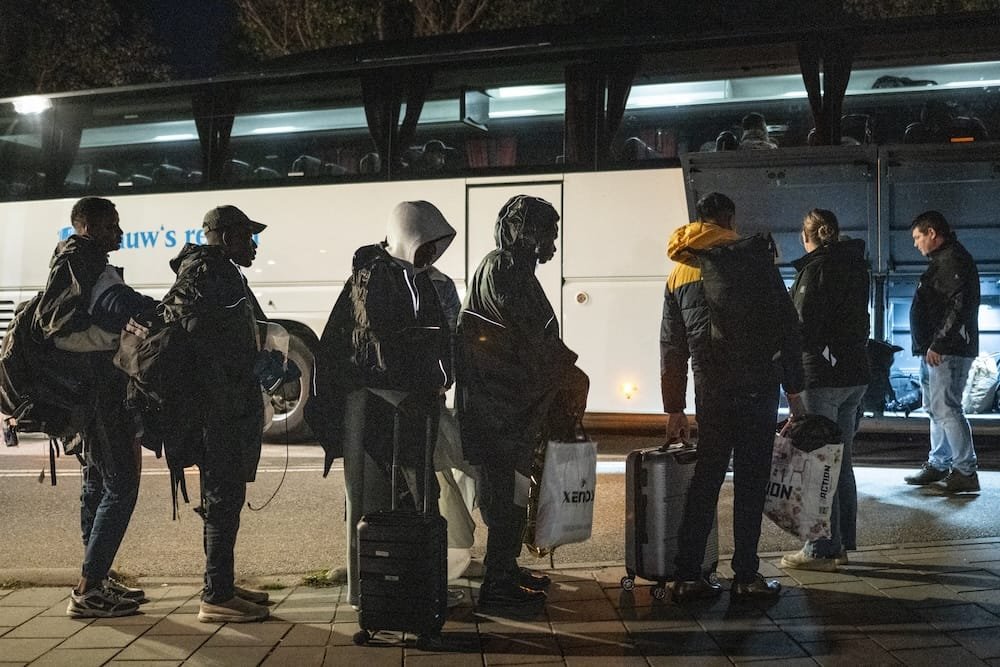
Several asylum seekers were forced to sleep outside the Ter Apel refugee centre on Wednesday night because there was no space for them inside, broadcaster NOS reported.
In total, 51 people were taken to other accommodation in nearby Stadskanaal but dozens of others who turned up after the bus left at 10.30 pm had to sleep outdoors.
All new asylum seekers have to report to the Ter Apel location to start their application process but the centre only has space for some 2,000 people and is constantly full. On Wednesday night, 2,240 people slept at the centre.
The Red Cross and other officials say they expect the situation at Ter Apel to worsen in the coming days because of the lack of alternative accommodation, with some saying up to 120 people may have nowhere to sleep.
“I cannot believe we are in this situation once more,” local mayor Klaas Sloots told reporters. “When this happened before, we said this could never be repeated, but still it has happened again.”
In 2022, up to 700 people were forced to sleep in tents and other makeshift accommodation outside the gates.
Meanwhile, the national audit office says it expects delays in processing asylum claims to worsen when new EU rules come into effect in June.
Algemene Rekenkamer president Pieter Duisenberg told current affairs show Nieuwsuur he expects the waiting time for some refugees to mount up to five or even 10 years because of the new rules.
The government and immigration service IND have decided people arriving in the Netherlands under the terms of the EU migration pact must be processed first, meaning those on the waiting lists will be put on hold.
Waiting lists
The current processing time for refugees with a good chance of success is 67 months and some 50,000 are currently waiting for a decision. By law, they should have a decision within six months.
The EU pact includes many of the measures in asylum legislation which was rejected by the senate earlier this year. The pact says refugees should be screened more quickly and if they are found not to qualify for refugee status, should be returned to their country of origin or another safe country more quickly.
Violent protests
Refugee settlement agency COA had hoped legislation to ensure all 342 Dutch local authorities provide housing for their fair share of refugees would relieve the pressure.
However, local protests – often violent – and the nationwide housing crisis mean some 19,000 refugees who should be living in ordinary housing are still in government accommodation.
Duisenberg said the COA is unrealistic in its expectations. “The entire chain has seized up, and waiting lists are part of that,” he said. “And asylum seekers are waiting in refugee centres.”