

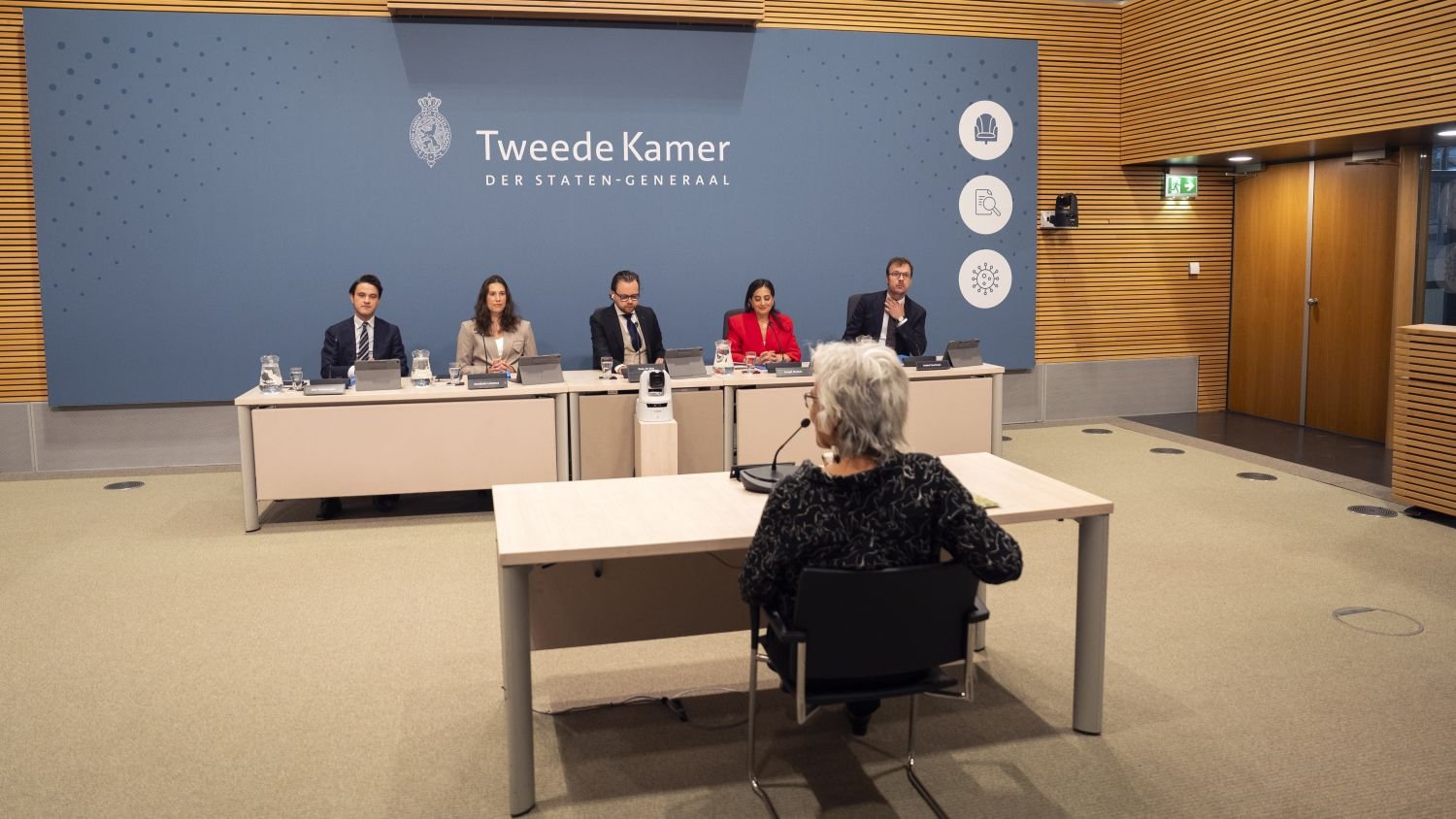
If the government had acted faster at the outbreak of the coronavirus in March 2020 it would likely have meant fewer deaths in the first wave of the pandemic, the parliamentary inquiry into the Netherlands’ covid response was told on its first day of public testimony.
Marion Koopmans, who advised the government as a member of its expert Outbreak Management Team, said earlier measures would have meant “less spread and fewer deaths”. But she stressed how little was known at the time, and said she doubted the pandemic as a whole would have unfolded very differently.
Ernst Kuipers, who chaired the national acute care network at the start of the crisis, told current affairs programme Nieuwsuur last week that tougher measures four days earlier could have spared around 4,000 lives, from an estimated 6,000 first-wave deaths, had the public complied. He is due to stand as a witness in the proceedings.
Koopmans would not give any estimate as to how many lives might have been saved.
The public health institute RIVM has also refused to make an estimate, despite a 2023 parliamentary motion and a pledge to do so by Kuipers when he later became health minister.
It called the scenario “too hypothetical”, and noted that intervening a few days later would have more than doubled the toll. The motion was prompted by a UK inquiry finding that 23,000 lives could have been saved had England locked down a week earlier.
Was the country ready?
The afternoon’s witness, Bruno Bruins, who was medical care minister when the virus reached the Netherlands, was asked about the government’s assurance to parliament on January 24, 2020 that the country was “well prepared” for an outbreak.
Six and a half years on, he could not explain what that assurance was based on.
A crisis structure had been set up and the virus added to the official A-list of notifiable diseases, giving him extra powers, Bruins said – but he offered no further examples.
He told the committee he would never again use the word “prepared”, having learned that readiness “has to be a permanent state of attention”.
Funding since scrapped
Both witnesses said the country is still not ready for the next pandemic. Koopmans said she had to write subsidy applications to begin basic research in early 2020, leaving her “tied” in the crucial opening phase.
The money meant to address that has since gone. After the pandemic, the Rutte IV cabinet set aside €300 million for preparedness, acting on the recommendations of the Dutch Safety Board, which had found the government was unprepared and had improvised its response.
The Schoof cabinet scrapped the funding, and the current Jetten cabinet has left the cut in place. Koopmans called that “unwise and short-sighted” in remarks to Nieuwsuur earlier this year.