



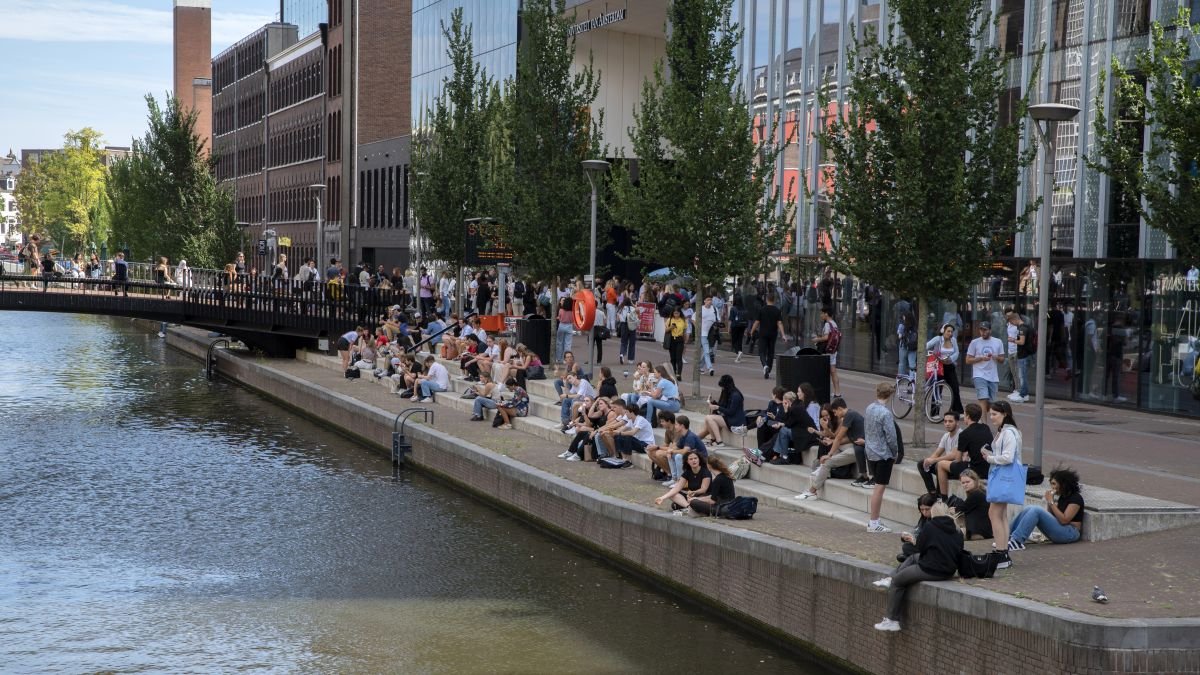
International students in the Netherlands more than pay for themselves over their lifetimes, and capping their number would do little to ease the housing shortage, according to new research by the government’s economic policy analysis bureau CPB.
The money the government spends on them – student grants, healthcare, social security – is on average more than recouped, the CPB said, mainly because a growing share stay after graduating and pay tax.
More international students do add to housing pressure in the short term, the bureau found. But over time the effect is limited, because the market adjusts – and how far it does depends on housing policy, not student numbers.
A university graduate from outside the European Economic Area contributes about €243,000 over their lifetime, the CPB calculates, and one from an EEA country €82,500. For graduates of universities of applied sciences, the figures are €117,000 and €13,300.
Staying on
Around 17% of students in the Netherlands last year came from abroad, most from the EEA – the EU plus Norway, Iceland and Liechtenstein. Like Dutch students, they pay only the statutory tuition fee, €2,694 this year, and can apply for student finance under certain conditions.
Students from outside the EEA have no right to student finance and pay the full cost of their courses, so cost the government little.
They are also staying on in greater numbers. Five years after leaving higher education, about one in five EEA graduates and two in five from outside the bloc are still in the Netherlands – roughly a quarter more than a decade ago.
“The longer they work here, the more tax they pay,” CPB researcher Paul Verstraten told broadcaster NOS. Graduates are also finding work faster, he said, partly because of the tight labour market.
Changing course
The study was commissioned by the education ministry itself, now run by D66’s Rianne Letschert, whose approach is more accommodating than the previous Schoof cabinet. Graduates who stay make relatively little use of social security and are mostly highly educated, Verstraten noted, so cutting numbers is not obviously the answer.
In 2024 the Schoof cabinet wanted to reduce enrolment to save nearly €300 million and ease pressure on housing and public services. Five universities warned the cuts would hit the economy hard.
Letschert’s ministry has since left universities and colleges to manage the intake themselves, steering recruitment towards shortage sectors such as engineering and healthcare. International student numbers fell for the first time in two decades this year.