



Buying your first home is one of the biggest financial decisions most people make in their lives. And as an international in the Netherlands, it’s likely that the process, language and unwritten rules are all different from what you might expect.
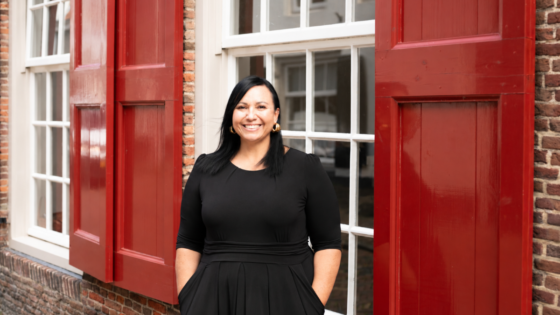
Cherene Kruger, founder of Homes for Expats, has spent years helping international buyers through their first Dutch house purchase, and her starting point is always the same: don’t assume the process works the way it does back home.
“The biggest problem is you don’t know what you don’t know,” she says. “You’re not shopping for property on your home turf, which already makes things stressful.” In the Netherlands, that unfamiliar cast list includes two makelaars (estate agents), a bank, a mortgage adviser and a notary: roles that may not exist, or might work quite differently, elsewhere.
The estate agent isn’t on your side
The most important thing to understand, says Cherene, is who actually represents whom. “The selling makelaar represents the seller. If you appoint a buying makelaar, they are the one representing your interests and fighting in your corner.”
“I once had a client who kept saying out loud how much she was prepared to pay for a house, right in front of the selling agent,” she says.
It’s a distinction that doesn’t occur to a lot of first-time buyers, and one whose consequences Cherene has experienced herself. She once bought a new-build property that didn’t automatically come with plastered and painted walls, a paved driveway or a levelled garden with grass, because no one had properly explained what was and wasn’t included beforehand.
Don’t get caught up in overbidding
While overbidding is often a fact of life in the Dutch market, knowing how much to offer can be one of the hardest things for international buyers to navigate. The asking price doesn’t reflect market value, and simply offering more isn’t always the right decision.
Cherene also sees more buyers turning to AI for answers. “AI can be a useful research tool, but it cannot replace someone being on the ground, seeing the property, understanding what’s happening in that particular market and having actual lived experience.”
Cherene’s own approach is deliberately pragmatic: research the area, weigh market value against what a property is actually worth, and look at comparable sales, understand the market value and then decide what the property is worth to you as a buyer. “My job is to help you make the right decision and the right investment,” she says. “You’re buying a house, not a hamburger, so it’s incredibly important we get this right!” She would rather see a client lose a property than win one at a cost that leaves them in negative equity for years to come.
Get financing sorted before you fall for a house
Every offer Cherene puts together includes two standard conditions: a financing clause and a technical inspection. Both protect the buyer. If financing falls through without a financing condition, the buyer could face a penalty of 10% of the purchase price. A technical inspection condition offers protection if serious defects are uncovered.
For instance, the inspection can unearth problems like hidden mould or rotten beams that aren’t obvious during a viewing. “If there’s a major issue that is going to cost my clients a lot of money, I would rather walk away from a bad relationship than marry just for the sake of getting married.” Depending on how the technical inspection condition has been agreed, serious defects may give the buyer the opportunity to renegotiate or withdraw from the purchase.
For buyers relocating for work, getting that financial picture in order early is arguably the single most useful thing they can do. Once a client signs with Homes for Expats, Cherene advises them to register with a mortgage adviser or their bank and have their documents submitted before the serious house hunting begins. That way, they know what’s actually affordable and are in a position to move when they find the right home.
Homes for Expats sets out the buying process in more detail, but the underlying message is consistent: have the financing conversation before the house hunting starts, not after you’ve found the one.
What you see isn’t necessarily what you get
One of Cherene’s most vivid cases involved an apartment marketed as a two-bedroom, which her clients fell in love with. When she started digging into the property’s deed of division, however, the numbers didn’t add up: the apartment was around 10 square metres smaller on the deed than advertised, and that second “bedroom” up a flight of stairs was in fact a storage room.
The room wasn’t listed on the deed of division as residential space, the deed of division had never been amended to change its designated use, and the previous owner had never obtained permission to convert the storage space into liveable accommodation, either from the gemeente (local council) or from the building’s VvE (owners’ association).
Cherene is clear on the lesson: “Triple-check everything. A property’s paperwork, the deed of division, VvE permissions and permit history can tell a very different story from the one a listing suggests. And if something isn’t documented, there’s probably a reason for that.”
Dutch rules may not be what you’d expect
A recurring misconception is that owning property automatically means being free to rent it out for extra income, as it might elsewhere. In the Netherlands, that’s not necessarily the case. Your mortgage conditions, municipal rules, VvE rules and Dutch tenancy law can all affect whether and how a property may be rented.
“Most people have been taught you can generate wealth this way,” she says, “but it’s different in the Netherlands.” It’s a reminder that runs through all of Cherene’s advice: assume nothing carries over from home, however similar it looks on the surface.
Getting the keys
Cherene admits to a soft spot for first-time buyers specifically: “If I do my job well, I set the bar for every real estate transaction they’ll ever make. You’ll always remember the first home you buy. I get to be part of people’s joy, and for me that is my “why’”.
“I love helping people, and this fits so perfectly into that part of me. If I do my job right, I haven’t just helped them buy a house. I’ve been part of them buying their very first home, something they will never forget.”
For many of her clients, most of them a long way from where they grew up, the moment they get the keys is about more than the property itself. It’s the point at which the Netherlands really feels like home.
For anyone starting to think about buying, Cherene’s advice is simple: get your financial ducks in a row, and book a free chat with Homes for Expats before you start house hunting.