




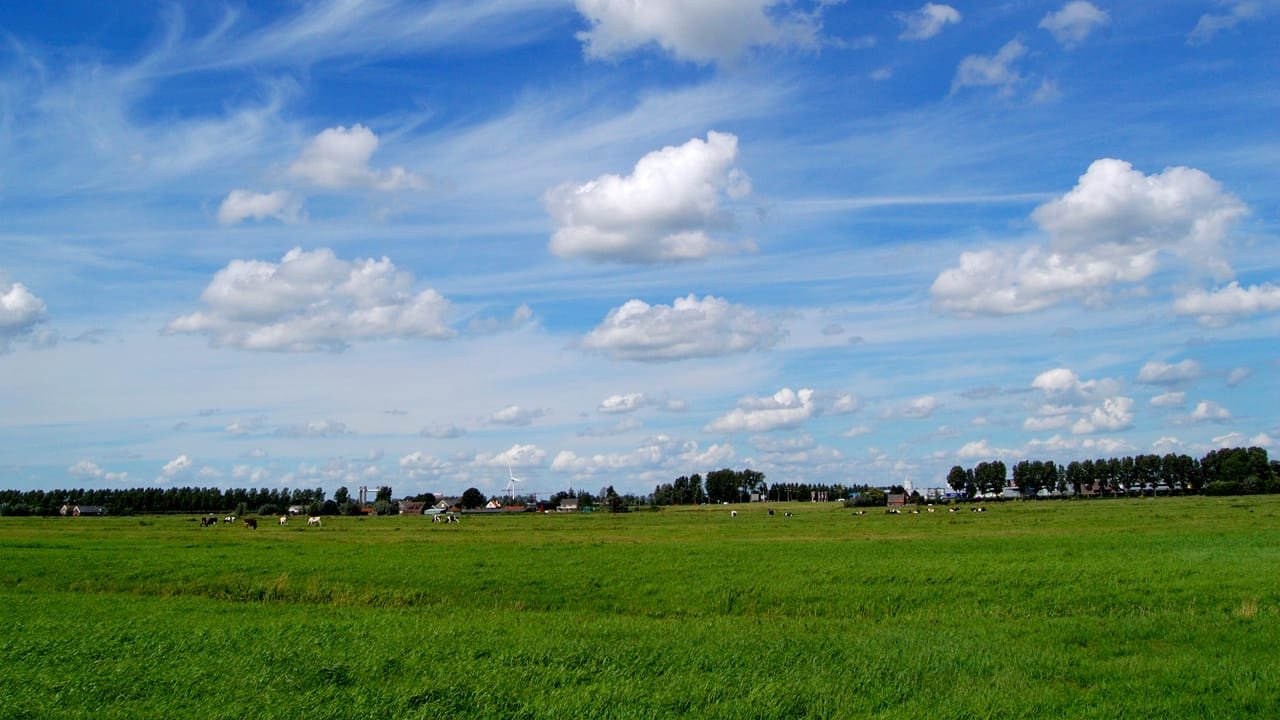
Plans to build a new village at the lowest point in the Netherlands have moved a step closer to realisation after the water board said it was withdrawing its objection.
Cortelande, in the municipality of Zuidplas, near Gouda, will have 8,000 homes lying 6.78 metres (22ft) below NAP – the standard Dutch zero line, equivalent to the average level of the North Sea – if the plans go ahead.
Councillors say the project is sustainable despite rising sea levels, heavier rainfall caused by climate change and projections indicating that the ground could sink to 10 metres (30ft) below sea level.
The water board for Schieland en de Krimpenerwaard had been in dispute with the local council in Zuidplas about the plans, citing concerns about water safety, storage and whether the village could withstand the impact of global warming.
But despite the soft ground and risk of flooding, water and safety experts say it should be possible to engineer a village that can stay dry until at least the end of this century.
The water authority is expected to drop its appeal against against the council’s decision to approve the project when it meets on Wednesday, after the former housing minister Mona Keijzer appointed a mediator to settle the dispute.
Challenging location
“Of course it’s a challenging location, so we have to set the bar higher,” VVD councillor Annika van Gerwen-Westerling told NOS. “But I also think we can show everyone that we have the technical skills to be able to build and live well.”
The solutions range from the traditional – building mounds known as “terpen” to keep houses above flood levels – to more more modern techniques such as homes on stilts or so-called “amphibious houses” that sit on a floating platform which can break loose during a flood.
Floris Boogaard, of water technology specialists Delares, said the developers’ capacity would be tested to the limit by the challenges of building so deep below sea level.
“We’re very good at building and it’s fantastic that we can do it here. Everything is possible, technically. But the question is: is it smart? Is it strategic?
Rain risk
“Investments have been made, there is a housing shortage and we can do this. but we are pushing the boundaries.”
Martin Damen, a councillor for the left-wing party PRO, said the Netherlands had plenty of experience of keeping the water out.
“Let’s be honest: the risk isn’t that the dike on the IJssel will be breached. The risk here is heavy rain. And I’m convinced we can cope with that well.”