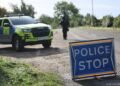



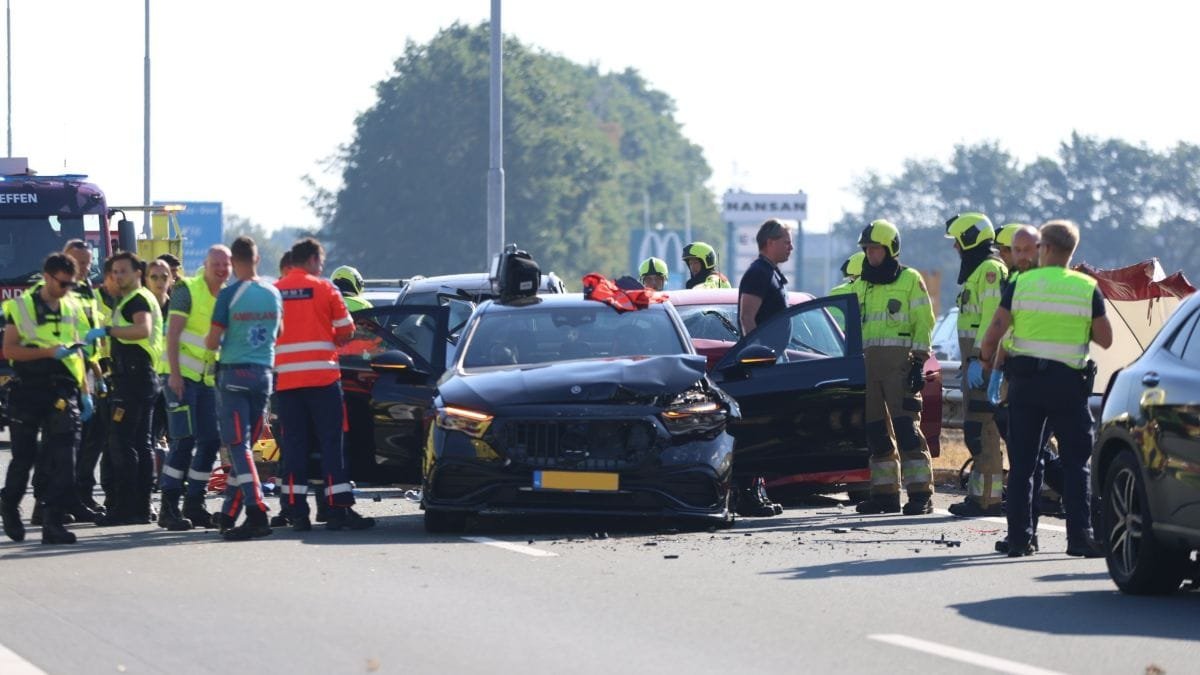
Prime minister Rob Jetten has said it is “unacceptable” that tractors were driving on the A59 motorway on Friday, after two people were killed and six injured in a crash. The collision happened at the back of a queue that had built up as the tractors drove to a protest in Den Bosch.
“It is unacceptable and incomprehensible to demonstrate on the motorway because it leads to very dangerous situations,” Jetten said during a press conference.
Jetten also said the decision not to stop the tractors earlier was not a good signal and would have to be reviewed. News agency ANP reported that 50 tractors were driving on the A2 towards Utrecht as he spoke. “Don’t do it, get off the motorway,” Jetten said.
Police said four cars were involved and that they were still investigating what caused the collision, but no tractors were involved.
The victims have not been identified. The tractors had been in the right-hand lane and other traffic could pass on the left, but a traffic jam still built up.
Disputed agreements
Tractors are not permitted on Dutch motorways. Earlier this week the public prosecution department (OM) and the police said they would not stop farmers who drove onto them, citing the right to demonstrate.
A spokesperson for the OM in Oost-Brabant told broadcaster NOS that this had not been agreed. The authorities help demonstrations go ahead, the spokesperson said, but once a tractor is on the motorway it is up to the local mayor, police and prosecutors to decide when and how to step in.
“A tractor on the motorway is never allowed, and is a criminal offence” the spokesperson said. The OM did not answer questions from NOS about what had been agreed instead, or why nobody intervened.
Provincial council members held a minute’s silence for the two dead. Mark van den Oever of Farmers Defence Force called on farmers at the provincial offices not to travel home by motorway.
What the protest is about
Noord-Brabant’s provincial executive intends to revoke the nature permits of five poultry farms close to protected nature areas, after environmental groups won a court case in April 2025.
The court found the protected areas were overloaded with nitrogen, and that the farms were a significant cause. But it stopped short of ordering the permits withdrawn, giving the province, the farmers and the environmental groups a year to come up with a plan that would cut nitrogen levels for good.
The farmers sent in their plans in November 2025 but in July were told their permits would be revoked, although that decision is not yet final. The provincial executive has admitted it never gave them a proper response to those plans, Omroep Brabant reported.
Members of the provincial council, which oversees the executive, broke off their summer break on Friday for a debate on the plan demanded by seven opposition parties, led by farmers’ party BBB. Saskia Boelema, the executive member responsible, told them the province should have sat down with the farmers earlier and apologised for the way the process had been handled.