


New Amsterdammer Annelie Wambeek is part Sri Lankan and part English. She was born in Sweden and lived in several different countries before relocating to the Netherlands. She recommends trying Ome Tom’s poffertjes from the Dappermarkt, loves swimming in open water, and is very happy with the Dutch healthcare system.
How did you end up in the Netherlands?
I moved here nine years ago for work. Honestly, the job was more of an excuse to live in Amsterdam, which had always appealed to me. I’m not really a big city person, but Amsterdam is the right size for me. There’s enough chaos to keep it interesting, but it’s also efficient.
I came here for a job at a research institute and then somehow found myself working in the Dutch banking sector. Now, nine years later, I feel like I’m slowly putting down roots as I continue running my own business as a trainer, speaker and facilitator.
How do you describe yourself – an expat, lovepat, immigrant, international?
It usually depends on who I’m talking to, but I moved here as an expat. I’m not fully comfortable with that word as it doesn’t always include people who look like me. I would now consider one of my identities to be an Amsterdammer, but I’ve also come to terms with the fact that I’ve never really belonged anywhere fully.
How long do you plan to stay?
This is a bit of a hard question because the answer scares me a little bit. When I first moved here, I imagined it would be five years before my next move. As someone with quite itchy feet, that was what I thought would happen.
But I actually haven’t found any other European city that I would rather live in. So I think the idea of indefinitely feels a bit daunting, but I see the Netherlands as my base for the foreseeable future, ideally with the ability to escape a few months of the year to warmer climes.
Do you speak Dutch and how did you learn?
I would say both yes and no. Dutch is my fifth language and I can follow quite well. I started Dutch lessons the second week after I moved here, before I even found somewhere to live.
I also did some more intensive courses, but ultimately what helped was exposure at work. My financial Dutch is now decent and I’m getting more practice in “everyday” Dutch. Having said all of that, I’m a bit hesitant to speak as much as I should, except with children and dogs.
I actually tend to speak more Dutch outside the Netherlands. You’ll find Dutch travellers all over the world and in those situations, I tend to have more self-confidence. People don’t expect me to speak Dutch there, either.
What’s your favourite Dutch thing?
The skies. I’m lucky to have a view of the sky here in Amsterdam. I’ve never seen skies like this anywhere. I can understand why they appear in so many paintings. Even when it’s cloudy, there are so many different shades of grey.
I love how fast the skies and the weather change here. That doesn’t happen in Sri Lanka where it’s either hot or hot and rainy. And I also love the seasons. In Sri Lanka, it’s tropical all year round.
I should also say my Dutch partner is one of my favourite Dutch things, but he’ll probably be fine with me choosing the sky and the seasons.
How Dutch have you become?
Some of my friends would say that I’ve become quite Dutch, but that’s probably most related to my love of putting social things in my agenda. That’s something that I integrated, straight away – the stereotype that you schedule everything weeks in advance works well for me.
I think my communication style is still quite un-Dutch, which is a somewhat conscious choice. I’ve experimented with being more direct, but it doesn’t really feel like me.
It was also only after I moved to the Netherlands that I realised how English I am. I can be indirect and I beat around the bush a little bit, which is not always appreciated here. But I love a korting and an actie and have come to appreciate the no-nonsense efficiency of the Dutch.
Which three Dutch people (dead or alive) would you most like to meet?
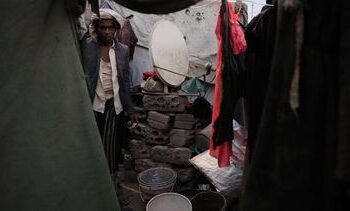
The first one is my great, great, great…probably a few more greats grandfather. He came from a town called Wambeek in what is now Belgium. It’s also my surname. He went to Sri Lanka as part of the VOC.
In Sri Lanka, we are a separate ethnic group called Dutch Burghers. I’d love to find out who he was, why he went, and if he ever imagined one of his descendants would come back here hundreds of years later and be a cultural bridge.
Johan van Angelbeek is the second one. He was the last Dutch governor of Ceylon, which is now called Sri Lanka. He was basically responsible for overseeing the transfer of the Dutch colonial territories to the British. I would love to meet him and see what his experiences were like as a Dutchman in Sri Lanka in a very fascinating time.
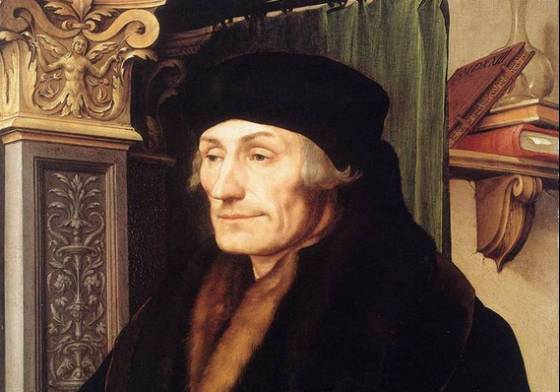
The third person would be Erasmus, not because I’m a huge humanist, but because it would be interesting to speak with someone who shaped so many of the philosophy books we read today. I also think he was probably somewhat of a rebel and controversial figure in hindsight. I would love to find out if he had any idea of the impact he was going to have in the future.
What’s your top tourist tip?
They should definitely explore one of the Amsterdam neighbourhoods. For me, Amsterdam-Oost is the one I feel most at home in. I always tell people to go to the Dappermarkt to get some poffertjes from Tom at Ome Tom’s Poffertjes. He is quite the character.
There’s a jenever distillery in the Flevopark called Nieuwe Diep Distillery which, weather depending, is a great experience. It’s no frills. You can get cheese and sausage and try some of their homemade jenever in a beautiful setting.
Tell us something surprising you’ve found out about the Netherlands
I was surprised at how few Dutch people knew Sri Lanka was a colony for 156 years. There’s a strong Dutch identity there among the Dutch Burghers and quite a lot of pride as well. It is a huge part of not only our history, but the present too.
One of the biggest complaints I hear from internationals is about the healthcare system here, but I’m very grateful to have had a positive experience. Yes, if you aren’t very sick, you’ll be sent home with paracetamol. In my experience though, if you’re seriously ill, mentally or physically, this is definitely the country you want to be in. I know that’s partially luck as I have an excellent huisarts and faith in the system.
If you had just 24 hours left in the Netherlands, what would you do?
I have been spoiled a bit by swimming in the clear ocean but, in the eastern Docklands, there’s a spot I love. I would probably go there via the Dappermarkt on my bike with my trusty inflatable lilo and pick up a few friends on the way.
I love being on the water, so I would also get a boat and go around to some of the spots in Amsterdam where I used to row along the Amstel.
If this were a full 24 hours, I’d also go visit my partner who lives in the platteland out in the polders close to Gouda. For me, that’s a whole other world. In Amsterdam, I only have a balcony, so there’s a novelty for me in getting to mow grass and potter around in the garden.
If it was really my final night, I’d go to Fitz’s Bar for a last hurrah. It has very fancy and delicious cocktails. I’d go and splurge.
Annelie was speaking to Brandon Hartley.