




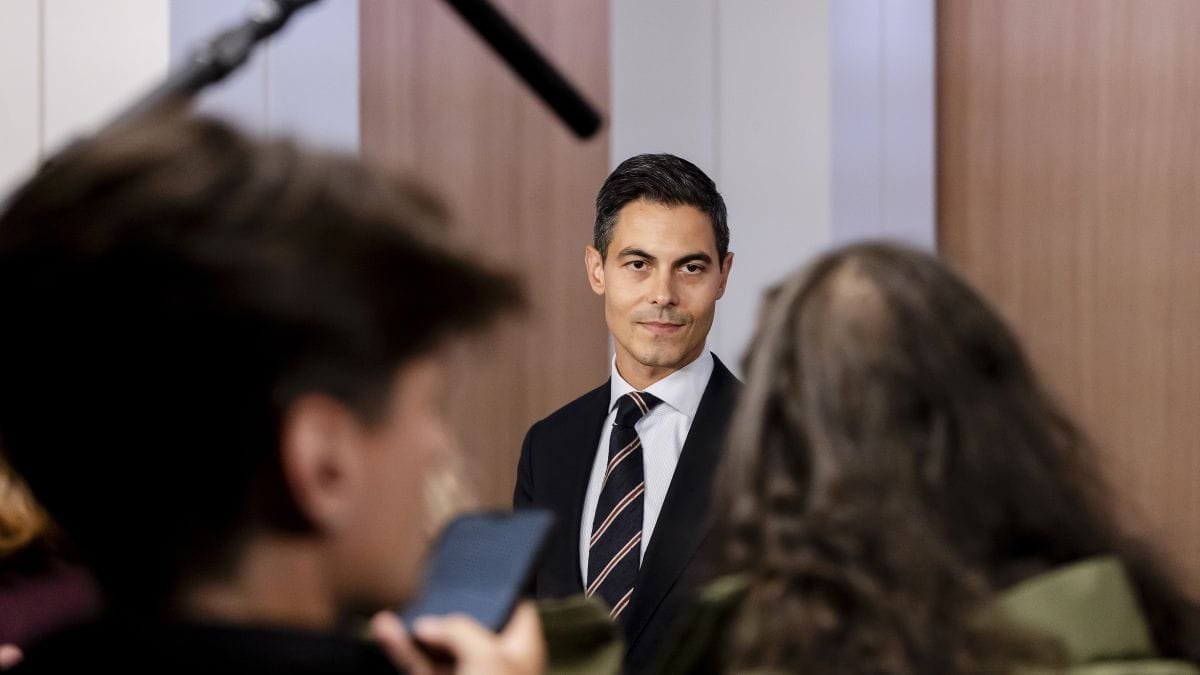
A council official, a police employee and a member of the Dutch air force are among thousands of people posting homophobic abuse under prime minister Rob Jetten’s social media messages on X, an investigation by the Algemeen Dagblad (AD) has found.
The paper analysed 45,860 replies to 323 posts sent from the prime minister’s official account during his first six months in office. One in 20 – 2,293 replies – was homophobic, it said.
The abuse appeared under routine posts, from a congratulatory message for Queen Máxima to a post about Amsterdam Pride, and did not depend on the topics Jetten was writing about.
AD identified two recurring forms of abuse. The first was crude slurs and the second, far more common, was a single insinuating question posted in Dutch hundreds of times: “Did you tell them you’re gay?”
Hard to prosecute
Most of the accounts did not belong to anonymous trolls, AD said. The large majority left a single homophobic reply and never returned, and the 10 most persistent accounts together produced less than 6% of the total.
Only a handful of repeat posters could be traced, among them the council, police and air force employees. Marloes van Noorloos, a professor of criminal law at Leiden University, told the paper that the insinuating questions were hard to prosecute as hate speech or criminal insult, because it depends largely on wording and context.
Civil servants, she said, could face disciplinary action under the rules governing public employees.
Jetten’s response
Jetten is the Netherlands’ first openly gay prime minister, and has said he files a police report every week over the abuse he receives about his sexuality. At the WorldPride conference last month he said big social media companies were “barely moderating content for hate speech”.
X’s own rules prohibit attacking users over their sexual orientation, but the company has taken little action, according to AD.
Dutch acceptance of homosexuality has stalled after years of progress. Jetten has said the Netherlands needs to get back on track and return to the top 10 countries for LGBTQI+ rights, from where it fell to number 13 after 2018.