




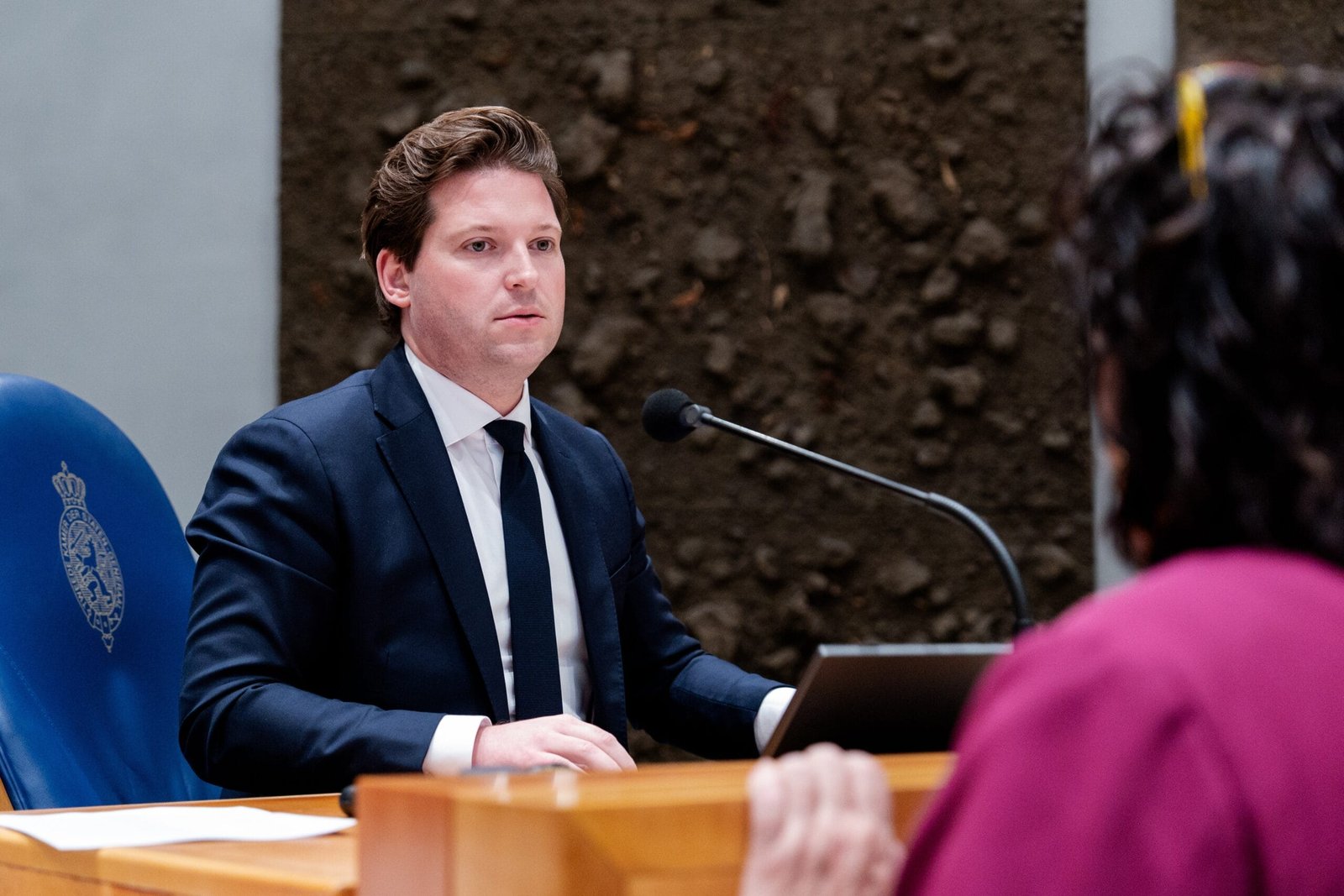
Around a quarter of questions from MPs in the Dutch parliament were written with the help of AI tools such as ChatGPT or Claude, according to research by broadcaster NOS.
NOS analysed 28,000 questions using the AI detection tool Pangram and found that 26% of them showed stylistic features of AI.
Usage peaked at more than 30% just before the summer recess, but dropped to around 17% in July, roughly the same level as a year go.
Some MPs included a sentence or two of AI, while others used to generate whole strings of questions.
Last week prime minister Rob Jetten was criticised after it emerged that around 30% of his social media posts included AI-generated content.
Some of the messages were apparently personal reflections on sensitive subjects such as the mistreatment of Moluccan war veterans in the 1950s, which Jetten recently apologised for on behalf of the government.
Jetten defended the practice, saying that “like three-quarters of Dutch people I sometimes use AI to make things better”.
The use of AI to formulate questions is not necessarily a problem, according to some experts. “If MPs weren’t using it at all I would see that as a bad thing,” AI developer Maarten Sukel told NOS.
But he said it should not be used as a short-cut for in-depth research. “If you’re working on a dossier that you don’t know so much about and you let AI help you come up with questions to ask in parliament, that’s a problem.”
“Faster and smarter”
MP Daniël van den Berg, of the right-wing opposition party JA21, said: “I think it would be a shame for me to spend hours trawling through minutes and documents looking for media items. AI helps me do it faster and smarter.”
But Marleen Stikker, founder of De Digitale Stad, one of the Netherlands’ first online networks, said using AI in parliament undermined Dutch democracy.
“We are outsourcing our democratic system to the American AI companies’ algorithms, which aren’t even neutral, they’re skewed. That’s absurd, surely?”