


A luxury resort project in Albania that has triggered nationwide corruption protests was owned through the Netherlands for nearly two years – protected by Dutch financial structures that kept its backers unnamed and gave its investors a route around Albanian courts.
The project, linked to Jared Kushner, US president Donald Trump’s son-in-law, would turn a stretch of protected lagoon near the southern city of Vlora into an exclusive resort. The lagoon is a refuge for flamingos and other rare wildlife, and residents say land their families have farmed for generations is being taken from them.
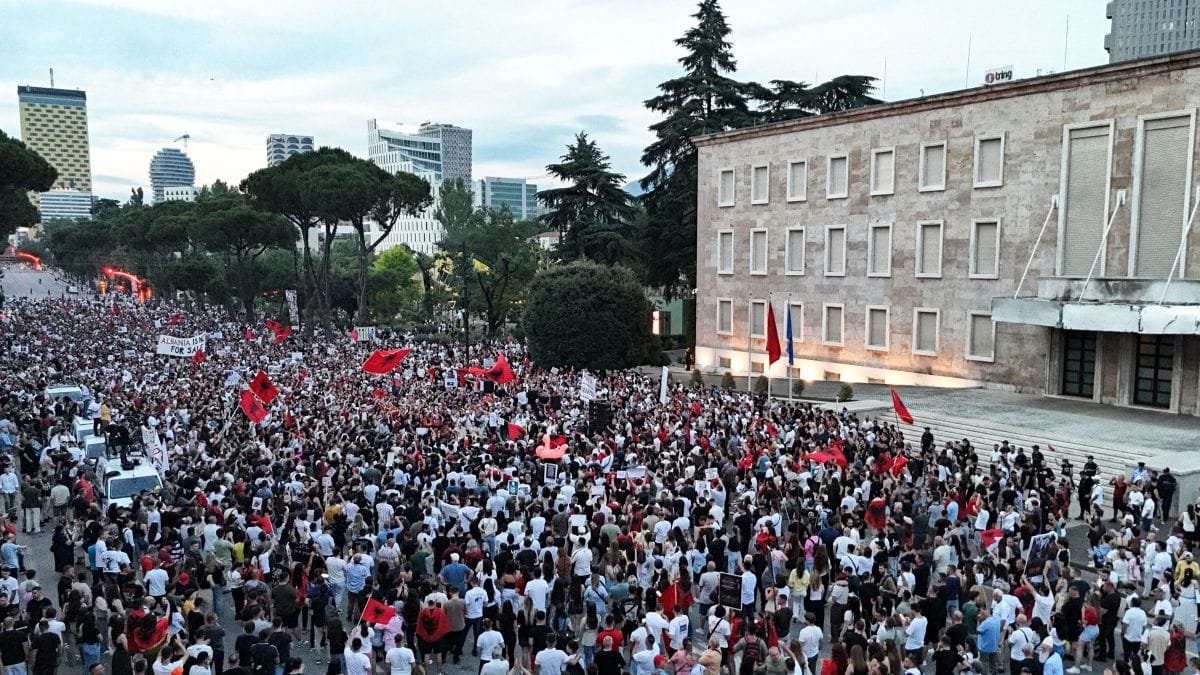
Protests have spread across the country, with demonstrators demanding the resignation of prime minister Edi Rama, whose government approved the project despite unresolved court cases over who owns the land. It could complicate the country’s attempt to join the EU.
The names on the register
On paper, the €4 billion project’s only named owners were two Amsterdam-based business people – Nikita Vinogradov and Zoya Gyurova – who run Dutch Trust Management, a firm paid to give foreign-owned companies a Dutch director and address.
The real backers appear nowhere. A person only has to be named on the register if they own more than a quarter of a company, and everyone behind the resort stays below that line. The ownership chain, first traced by the Balkan Investigative Reporting Network, runs through Amsterdam companies including one it reports is held by five unnamed Albanians.
When nobody crosses the line, the register names the people managing the structure instead.
Vinogradov told DutchNews that licensed trust offices carry out comprehensive checks, including establishing who ultimately owns the companies they manage and where the money comes from. Where land is involved, he said, the firm conducts “enhanced due diligence”, such as verifying legal titles and permits.
The register also shows the project’s Dutch parent company sold its entire stake to Sazan Development Holding, registered at the Qatar Financial Centre in Doha, on May 7 – as the protests gathered pace – for €306,000. The ownership record has not yet been updated, and US media have linked the project to Kushner’s investment firm and to two Qatari billionaire brothers.
Why the Netherlands
The case shows how hard the Dutch system makes it to see who owns what, said Vincent Kiezebrink, a researcher at SOMO, the Amsterdam-based Centre for Research on Multinational Corporations.
The 25%-ownership rule, combined with a European court ruling that closed the Dutch ownership register to the public in 2022, means “you can’t track beneficial ownership for this Albanian project”, he told DutchNews.
The Netherlands often attracts foreign investors with no other tie to the country through its treaties, Kiezebrink said. A 2004 tax treaty can lower the Albanian tax on the investment’s returns, while a 1994 investment treaty lets Dutch-based investors take any dispute with Albania to closed-door international arbitration rather than its courts.
Researchers at the University of Amsterdam have ranked the Netherlands the world’s biggest conduit for corporate money flowing to tax havens, and the Netherlands considered banning trust offices altogether, before deciding against it in 2022.