


One of the oldest cities in the Netherlands, Maastricht lies in the southern part of the country, close to both the Belgian and German borders. It is no wonder that the founding treaty of the European Union was signed there, nor that the Belgian (and French) influence has created a food mecca.
No one can quite agree on its exact origins. Celts lived in the area at least as far back as the 5th century BC, and the Romans showed up about 600 years later to build a bridge over the Meuse River that now runs through the centre of the city. Maastricht played a vital role in the Carolingian Empire and the Holy Roman Empire, and its location made it quite coveted between the 16th and 18th centuries. Many of those fortifications are still standing.
It was the first Dutch city to be liberated by the Allies during World War II. Half-century later, the city hosted a series of councils that led to the signing of the Maastricht Treaty, which paved the way toward the establishment of the European Union and the euro.
Maastricht is now home for 125,000 people, including many of the students studying at nearby Maastricht University.
Five things to do
Enjoy the city’s long and storied past with a historic walk.
Start at the Vrijthof, the main square where Dutch conductor André Rieu holds his summer concert series and which turns into a Christmas market in the winter.
Vrijthof is home to the majestic Basilica of Saint Servatius, where Maastricht’s patron saint Servatius is said to have died in 384 AD. A stone church was built over his grave in the 6th century which has been gradually expanded to the looming structure you see today.
You can loop past Our Lady, Star of the Sea (Sterre der Zee), a popular pilgrimage site, and see the famous wooden statue of Mary that dates to the 15th century.
Walk under the Helpoort (Hell’s Gate), the oldest city gate in the whole of the Netherlands, and then stroll through the Stadspark. On a nice day, you can join the many students who spread out a blanket and enjoy a few beers in the sun.
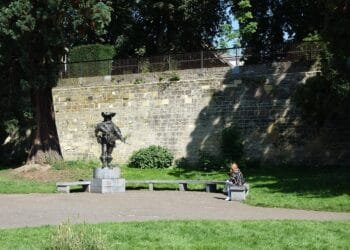
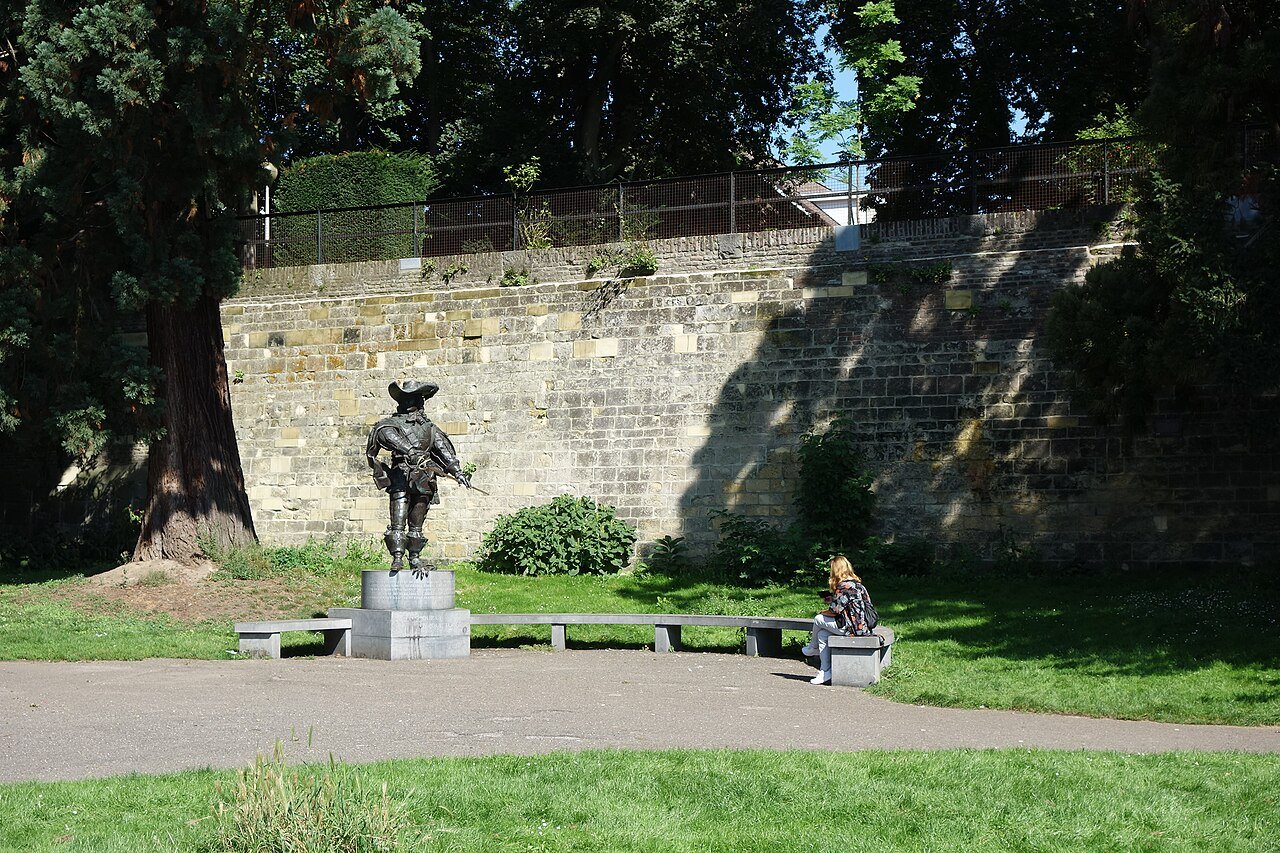
The part is also home to a number of sculptures and art installations. You can walk along the city walls and even see a statue of the fourth musketeer d’Artagnan. The leader of King Louis XIV’s elite corps of gentlemen, died in battle in 1673 during the French siege of Maastricht and archaeologists recently announced they may have discovered his skeletal remains under the floorboards of a nearby church.
If you want to go deeper into history, go underground
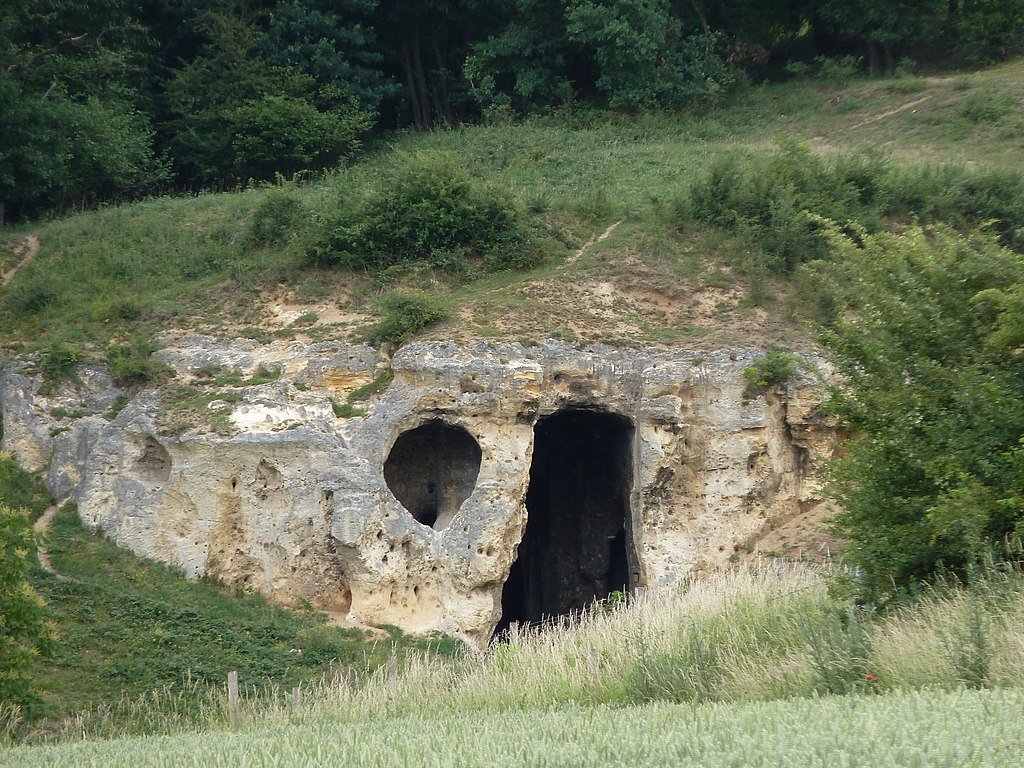
You can tour the caves of Mount Saint Peter, a collection of limestone quarries which date back to the 13th century. During World War II, they were used to safeguard arms and valuables from the Germans, including The Night Watch by Rembrandt van Rijn which was removed from its frame and rolled into a cylinder.
You can also walk through the casemates (kazematten), defensive corridors that run under the city. These structures are unique in the Netherlands, as the groundwater level is too high in other parts of the country.
Visit a bookstore
The 700-year-old Dominicanenkerk has quite the history. Along with serving as a house of worship, the church has been used as a warehouse, an archive, a printing house, and even a place to store bikes. Napoleon used it to store equipment and military personnel while invading the region in the 1790s.
It was converted into one of Europe’s most unique bookstores following a restoration project in the mid 2000s. If that’s not enough, you can also check out De Tribune, which was named the best literary bookstore in the Netherlands in 2024.
Shop til you drop
Maastricht is known for its shopping and the city is filled with boutiques, art galleries, vintage shops and more. The Rechtstraat is just one of many lovely shopping streets. On Wednesday and Fridays, the city holds a market with Friday wares more orientated towards clothing. On Saturday, hundreds of vendors turn out for the antiques market.
Go to the other extreme
Just outside Maastricht, you can find the highest point in the Netherlands. At a little over 322 metres tall, the Vaalserberg might merely be considered an average hill in other countries, but for the Netherlands, that’s a mountain.
It’s also home to Drielandenpunt, a three country-point where the borders of Belgium, Germany, and the Netherlands meet. Its lookout towers offer great views of the surrounding region.
Where to eat
Limburgse vlaai is the local delicacy and a must have on any trip to Maastricht. It’s not quite a pie and it’s not quite a pastry, but it’s definitely delicious. De Bisschopsmolen currently has no less than nine on the menu at their bakery and cafe. If you’d like to try your hand at making your own, they also host vlaai workshops.
The Onze Lieve Vrouweplein has a collection of outdoor cafes where you can enjoy a coffee or a beer.
If you want a fancy meal, look to L’Auberge. This lovely restaurant sits in the former stables of Château Neercanne. For an even fancier meal, the companion Restaurant Château Neercanne. For a real treat, you can stay at the hotel.
Cycle outside of the city and have lunch at Grand-Café Buitengoed Slavante. The country estate has a great breakfast menu and you can also take a walk on the grounds.
Another great lunch option in the city is the hip, Marres Kitchen. It’s in the same building as the museum Marres, House for Contemporary Culture so enjoy some art at the same time.
Where to stay
For a boutique experience, try Townhouse Hotel Maastricht. It also offers apartments if you’d like to eat your vlaai at home. Kruisherenhotel is the only five star hotel in the region. It’s housed in a 15th century monastery along the Kommelplein and each one of its 60 guest rooms features unique art and decor. The the Easy Hotel is a clean and cheap choice.
How to get there
The train stops practically in the middle of the city and you can walk in along a beautifully landscaped boulevard. It’s about three hours from Amsterdam. The drive is a bit shorter, at 2.5 hours, depending on the traffic.
Anything else
Keep in mind that Maastricht is south of the river and therefore deep into Carnival territory. Andre Rieu’s summer concerts are extremely popular and thus make it impossible to find hotels and parking.